

Taoist Magic: Ancient Wisdom in Action
Taoist magic (Fǎshù) has its roots in early human traditions, when people believed that special actions and rituals could influence the world around them. Hunters would mimic animals or draw hunting scenes, hoping their gestures would bring success.
In Taoism, magic includes legendary practices such as calling wind and rain, warding off demons, invisibility, magical transformations, creating armies from beans, traveling through the three realms, and predicting fortune or misfortune. Over time, these practices developed into a structured system of Taoist talismans, rituals, and mystical techniques, combining spiritual power with centuries of cultural wisdom.
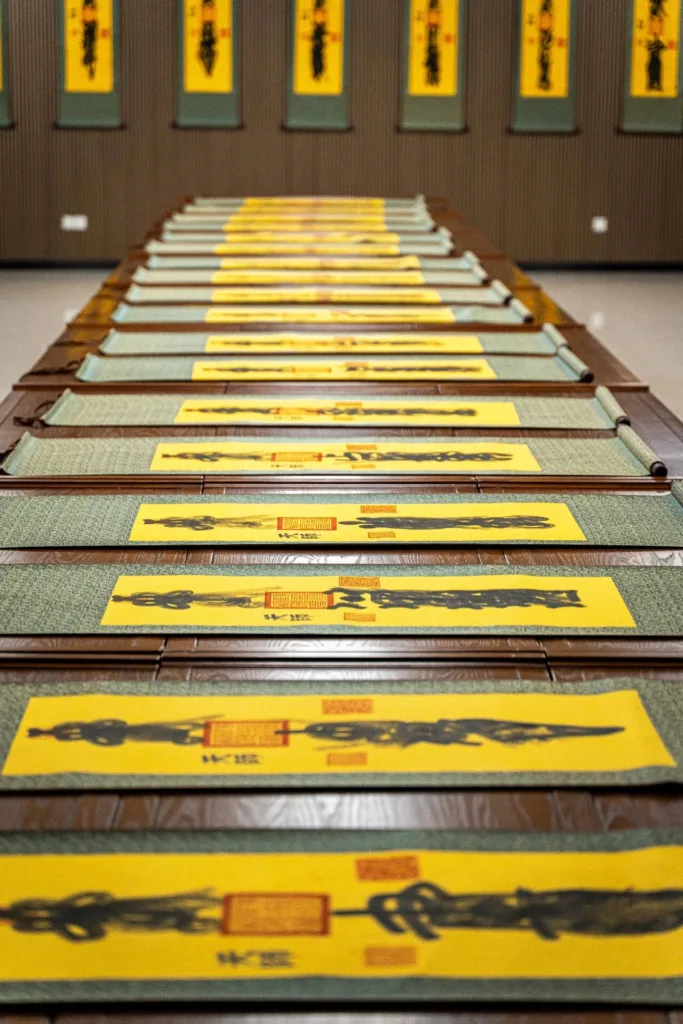
Taoist Talismans (Fu): Spiritual Tools for Blessing, Protection, and Healing
Taoist talismans, also known as “shen fu” (divine talisman), “dao fu” (Taoist talisman), or “tian fu” (heavenly talisman), are among the most important ritual tools in Taoism. Often used together with incantations, talismans serve as a primary means for Taoists to propagate the Dao and benefit society.
As Zhang Yuchu notes in Xianquan Ji:
“Talismans are numerous, all serving to bless the nation, enrich the people, stabilize the household, and protect the self. Those who revere them throughout history have all experienced their response; prayers are answered, and miraculous signs appear, confirming the efficacy of the teachings.”
Taoist masters have historically played an important social role, participating in public life and performing rituals that protect the state, aid the people, and harmonize natural and spiritual forces. Talismans are essential in ceremonies for:
- Securing the peace and stability of society
- Blessing the nation and protecting life
- Harmonizing yin and yang
- Praying for rain or sunshine
- Dispelling disasters and curing illnesses
- Extending life and safeguarding the deceased
- Performing rites for spirits and the afterlife
For ordinary people, talismans have been an integral part of daily life. From marriage, pregnancy, childbirth, and raising children to health, longevity, property, career, agriculture, commerce, and education, Taoist talismans provide spiritual support and psychological reassurance.
In medicine, talismans have been used to treat a wide range of illnesses and injuries, forming a unique branch of Taoist medicine known as talismanic therapy (fu zhou liao fa), which spans nearly all medical disciplines.
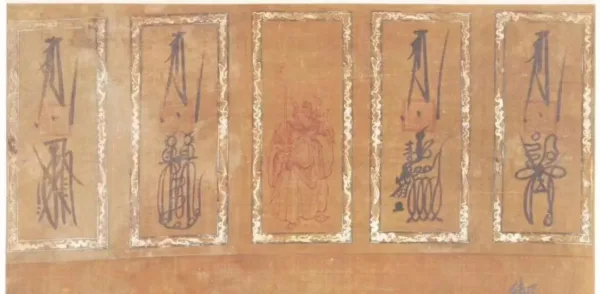
Healing with Taoist Talismans and Incantations
Taoist Talismans and Incantations as a Healing Practice
When Taoist priests use talismans (fu) and incantations (zhou) to treat illness or injury, it is actually a sophisticated, integrated therapeutic method. For example, to treat cuts or bruises and stop bleeding, a priest might use a cup of cold water, draw a talisman on it while chanting incantations, and then spray the water onto the wound. The injured area is then covered with several layers of yellow altar paper soaked in the water. This method can stop bleeding, reduce pain, decrease inflammation, and reduce swelling.
The effectiveness comes from multiple therapeutic principles:
- Qigong Therapy: The water infused with the talisman’s energy contains “qi,” which interacts with the patient’s own energy field.
- Herbal/Pharmacological Therapy: The yellow altar paper is treated with alum, which has hemostatic, antiseptic, anti-inflammatory, and wound-healing properties.
- Physical Therapy: Spraying cold water on the wound utilizes the physical principle of vasoconstriction to stop bleeding.
- Psychological Therapy: The ritual itself provides mental reassurance and spiritual comfort, enhancing recovery.
Taoists often use cinnabar (朱砂) when drawing talismans. Cinnabar is a mineral compound of mercury sulfide, bitter, cool, and toxic, with traditional properties for:
- Calming the spirit and mind
- Treating convulsions, palpitations, insomnia, dizziness, and fever
- Detoxifying, reducing swelling, and healing sores or skin ailments
- Repelling evil spirits and enhancing vitality
According to Bencao Zheng (Compendium of Materia Medica):
“Cinnabar, entering the heart, calms the mind and regulates blood; entering the lungs, descends qi and benefits the skin; entering the spleen, eliminates phlegm and nourishes muscles; entering the liver, moves stagnant blood and affects tendons; entering the kidneys, removes water-related pathogens and strengthens bones. Its effect is universal, treating convulsions, fever, toxins, and skin ailments.”
Thus, when Taoists use cinnabar to draw talismans, they cleverly combine its pharmacological properties with spiritual practice.
For example, in treating malaria, a priest may use a baked bread, draw a talisman on it with cinnabar while chanting incantations, and then have the patient eat it. The number of strokes varies with severity: three for mild cases, five for severe, and fewer for children. From a medical perspective, this method is scientifically plausible: cinnabar has sedative properties that can reduce convulsions, and its mercury content can kill Plasmodium and other pathogens. The baked bread helps stabilize digestive function and nourish the body, aligning with the principles of malaria treatment.
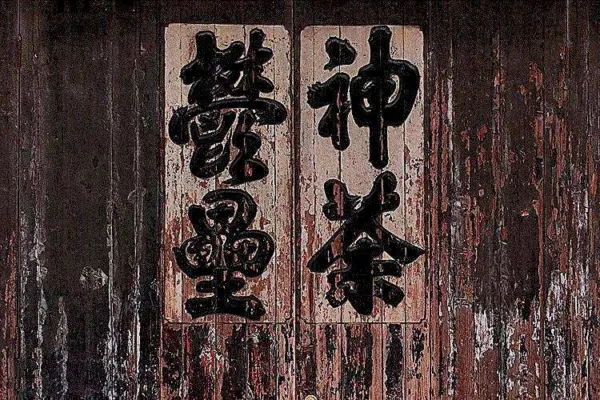
Cinnabar and Ink in Taoist Talismanic Healing
In Taoist practice, when cinnabar is drawn on talisman paper, the paper can later be burned to ashes and added to water. Even though the paper has turned to ash, the medicinal properties of cinnabar remain, and when ingested by the patient, it continues to be effective. This method of burning and ingesting talismans is closely related to Taoist elixir practices, in which substances like cinnabar are refined into immortality pills (Jindan).
Cinnabar is not only a key material for talismans but also considered the supreme substance in alchemical Taoism. Taoists regard cinnabar as a “superior elixir surpassing the efficacy of all grains”, which, when refined into a pill, could confer longevity or even immortality. Thus, the choice of cinnabar for talismanic use is deliberate: it combines practical medicinal effects with spiritual reverence.
Its bright red color evokes the sun, symbolizing vitality and life force. The sun dispels darkness and evil spirits, while vigorous life can overcome disease. In Taoist belief, the very forces that generate illness—malevolent spirits—are repelled by life and sunlight.
Ink is also frequently used in drawing talismans. Known in ancient China as “Wu Jin” (black gold), Chen Xuan, Xuan Xiang, or Wu Yu Kuai”, traditional ink is made from soot from pine smoke, mixed with glue and aromatic substances. Later, formulas using tung oil soot became common. In medicine, aged pine soot is preferred. Ink is pungent, neutral in nature, and has the following therapeutic uses:
- Stops bleeding
- Reduces swelling
- Treats vomiting blood, uterine bleeding, dysentery, boils, and skin abscesses
Yilin Zuan Yao (Essentials of Medicine) notes:
“Ancient ink used pine soot, which is warm in nature; modern ink often uses tung oil soot, which is cooler. Both, when carefully prepared with pearls, gold, ice, or musk, are considered valuable medicinally.”
Bencao Qiuzhen (Seeking Truth in Materia Medica) adds:
“Ink enters the liver and kidneys, is black and pungent, and slightly warming. It treats excess bleeding, nosebleeds during epidemics, postpartum hemorrhage, wounds, eye injuries with threads or insects. For stopping bleeding, bitter wine with leek juice may be added; for swelling, pig bile with vinegar; for eye ailments, ink with chicken blood can be applied; for abdominal distress, ground ink mixed with plant juice may be ingested. Treatments vary depending on the condition.”
Thus, both cinnabar and ink are carefully selected materials in Taoist talismanic practice, combining spiritual symbolism, medicinal properties, and ritual efficacy.
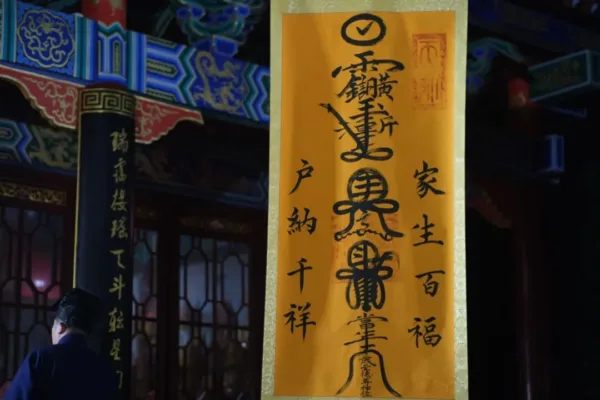
The Origins and Healing Power of Taoist Peach Wood Talismans
The earliest Taoist talismans were drawn on peach wood boards, hence the term “Peach Talismans” (Tao Fu). In Chinese culture, peach wood holds a special significance: it can repel evil spirits, protect against malevolent forces, and symbolically promote longevity.
Li Shizhen, the famous Ming dynasty physician, studied the history of peach talismans and noted:
“The peach is a tree of the West, the essence of the Five Woods, and an immortal tree. Its pungent taste and strong energy make it effective in repelling evil spirits and controlling all kinds of ghosts.”
Beyond spiritual and mystical beliefs, peach wood and its various parts also have practical medicinal value:
- Peach fruit: promotes fluid production, moistens intestines, activates blood circulation, and aids digestion.
- Peach flowers: help with water retention, blood circulation, constipation, edema, edema-related foot conditions, phlegm retention, menstrual blockage.
- Peach root: treats jaundice, vomiting blood, nasal bleeding, menstrual irregularities, swelling, hemorrhoids.
- Peach leaves: relieve rheumatism, headaches, malaria, skin rashes, ulcers, fungal infections, and act as an insecticide.
- Peach branches: alleviate abdominal pain, treat hidden sores, expel evil spirits causing pain, reduce stomach heat, neutralize toxins, prevent epidemics, and combat parasitic infections.
- Peach kernels: address blood stasis, menstrual issues, cough, heart or abdominal pain, postpartum bleeding, liver-related malaria, and other ailments.
- Other parts: bark, fuzz, and parasitic growths on peach trees are also used medicinally.
Truly, every part of the peach tree is valuable, which explains why Taoists frequently incorporate peach wood in talismanic and ritual practices. This is not coincidental—it reflects thousands of years of clinical practice by Taoist practitioners, highlighting the cultural, spiritual, and medicinal significance of peach wood in Taoism.
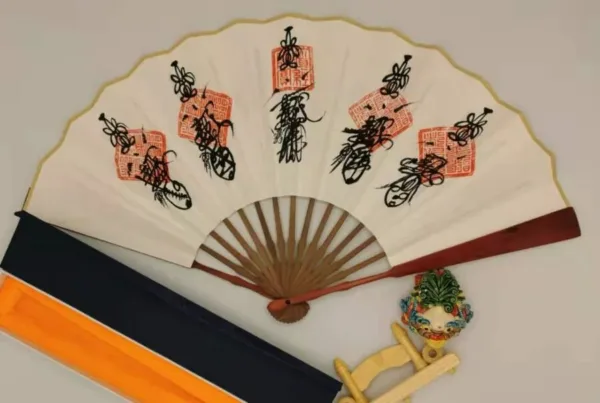
Taoist Mantras: The Power of Words in Rituals
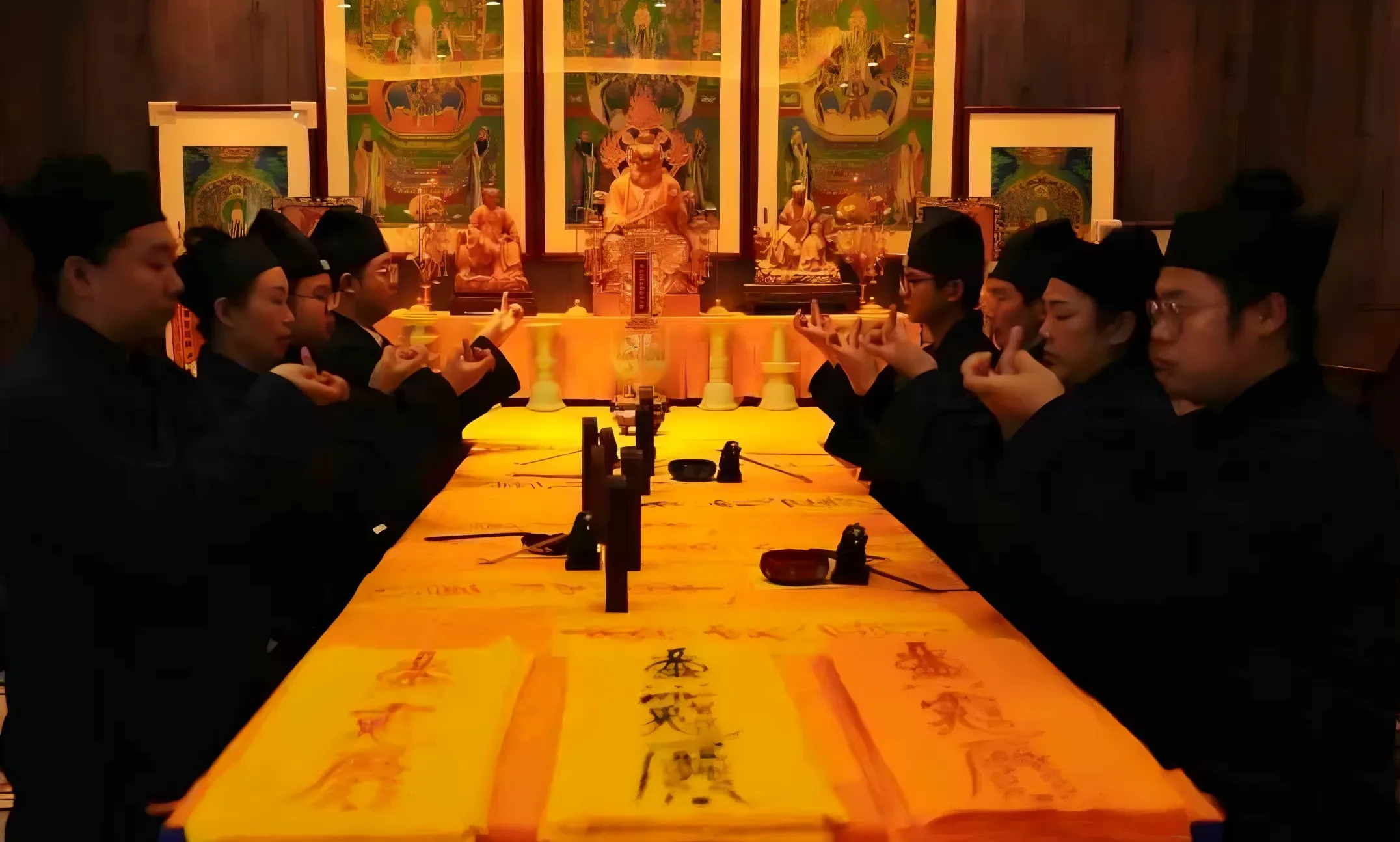
In Taoism, a mantra (also called shen zhou, jin zhou, or mi zhou) is an essential complement to the art of Taoist talismans (fu). Taoist magic rests on these two pillars: talismans and mantras. While a talisman represents the alignment of heaven, humanity, and spirit, a mantra embodies the intent and focus of the practitioner’s mind.
When performing rituals or creating talismans, mantras must be recited. Every ceremony, spell, or ritual in Taoism involves the use of mantras. Their purposes vary according to the context:
- Prayers: praising deities and requesting blessings.
- Control of natural forces: invoking deities to summon wind, rain, or thunder.
- Healing and exorcism: expelling illness or evil spirits.
- Internal cultivation: stabilizing the mind, refining energy, and transforming essence into qi.
Recitation is accompanied by gestures (mudras), visualization, and spiritual focus. As Bai Yuchan said:
“The power of a mantra lies in the mind and the visualization. This summons the celestial officers as if the gods themselves are present.”
Mantras act as multi-channel commands, connecting the practitioner’s internal and external energies to achieve a desired effect. For example:
- From Qian Fu Zhou (Talisman Deployment Mantra):
“Heavenly spirits execute the talisman; the Dao acts naturally. Earth spirits execute the talisman, punishing evil ghosts. Those who are not true shall not oppose; those who are not divine shall not assume divinity. Those who avoid shall be unharmed; those who oppose shall perish. Across the world, wherever the talisman goes, the true form appears, the reward and retribution are clear. Urgent, as the law commands!”
- From Zuo Lian Zhou (Seated Cultivation Mantra):
“The spirit is silent, the energy flows continuously. Red qi gathers in the elixir field, ascends, forms the Golden Bridge, manifests the Seven Origins. Chief spirits descend; red qi rotates and unites. Secret symbols hang. Breath coils, inhale swiftly, swallow slowly. Enter the Yuan Palace, true fire refines, then lift again. Golden light appears before the third eye, illuminating boundless space. The Flying Sword technique—do not linger. All officers obey. Focus is required. Urgent, as the law commands.”
Structurally, Taoist mantras often:
- Invoke the deity’s name and authority at the start.
- State the request or command in the middle.
- End with phrases like “jí jí rú lǜ lìng” (urgent, as the law commands) to emphasize the absolute authority of the divine.
In short, mantras are not mere words; they are vessels of spiritual power, channels through which the practitioner communicates with the divine to effect real-world change.
—Excerpted and adapted from Li Yuanguo, Reader on Chinese Taoism
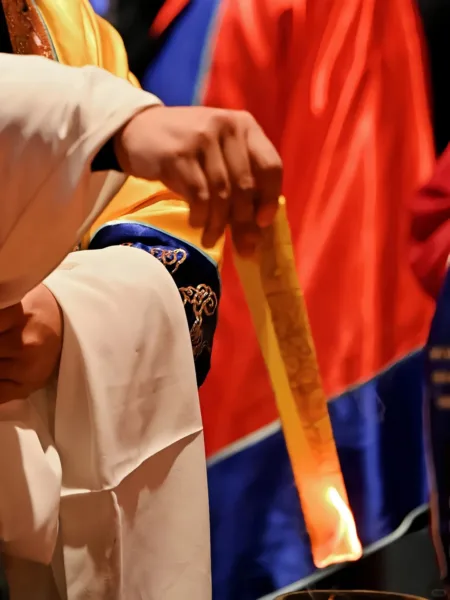
Related products
-
 Sale 15%Car Magnets Featuring Taoist Protection TalismanPrice range: $10.20 through $13.43
 - Sale 15%Taoist Anti-theft talisman Car MagnetsPrice range: $10.20 through $13.43
- Sale 15%Taoist Peace Talisman Car MagnetsPrice range: $10.20 through $13.43