


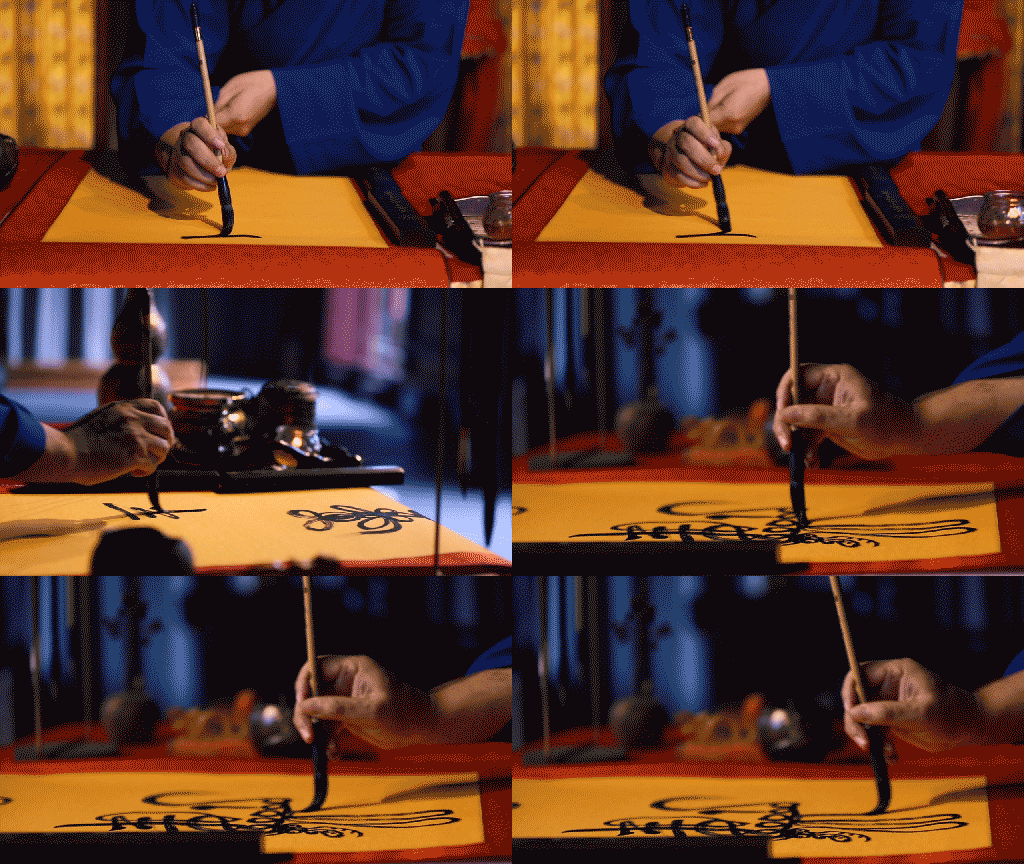
The Fundamentals of Daoist Talisman Writing (Shu Fu)
In Daoist magic, writing talismans (Shu Fu) is the foundation of all ritual practice. The principle is simple yet profound: write first, prepare second, and use last. The act of creating a talisman is not merely drawing symbols—it is imbuing objects with spiritual energy (Qi).
Materials and Tools for Talisman Writing
While similar to traditional Chinese calligraphy, talisman writing has its own specific tools and materials:
- Tools for Writing
- The brush is the most common instrument.
- Other methods include hands, swords, or ritual tablets (lingpai), used in “virtual writing” where no physical mark is left.
- Ink, cinnabar, and specially prepared pigments are used for marking.
- Objects for Writing
- Talismans can be written on nearly anything: paper, silk, wood, stone, metal, leaves, or even in the void, water, or fire.
- Paper and silk are most common for everyday ritual use.
- Stone walls, wooden slips, and iron tablets are durable and may be engraved for repeated use.
- Examples:
- Stone talismans are often for protection or exorcism.
- Wooden slips, sometimes called “dragon slips,” may be used in rain-summoning rituals.
- Iron tablets appear in rituals invoking dragons or spirits.
According to Daoist theory, a talisman must contain and store Qi, so almost any material—mud, reeds, tree bark, or leaves—can be used. Historical texts like Han Tianshi Shijia recount that the 19th Celestial Master, Zhu Xiu (Dezhen), cured illnesses by drawing talismans on tree leaves, demonstrating the flexibility of materials.
Talismans on Ritual Implements
Talismans are commonly drawn on Daoist ritual implements, including:
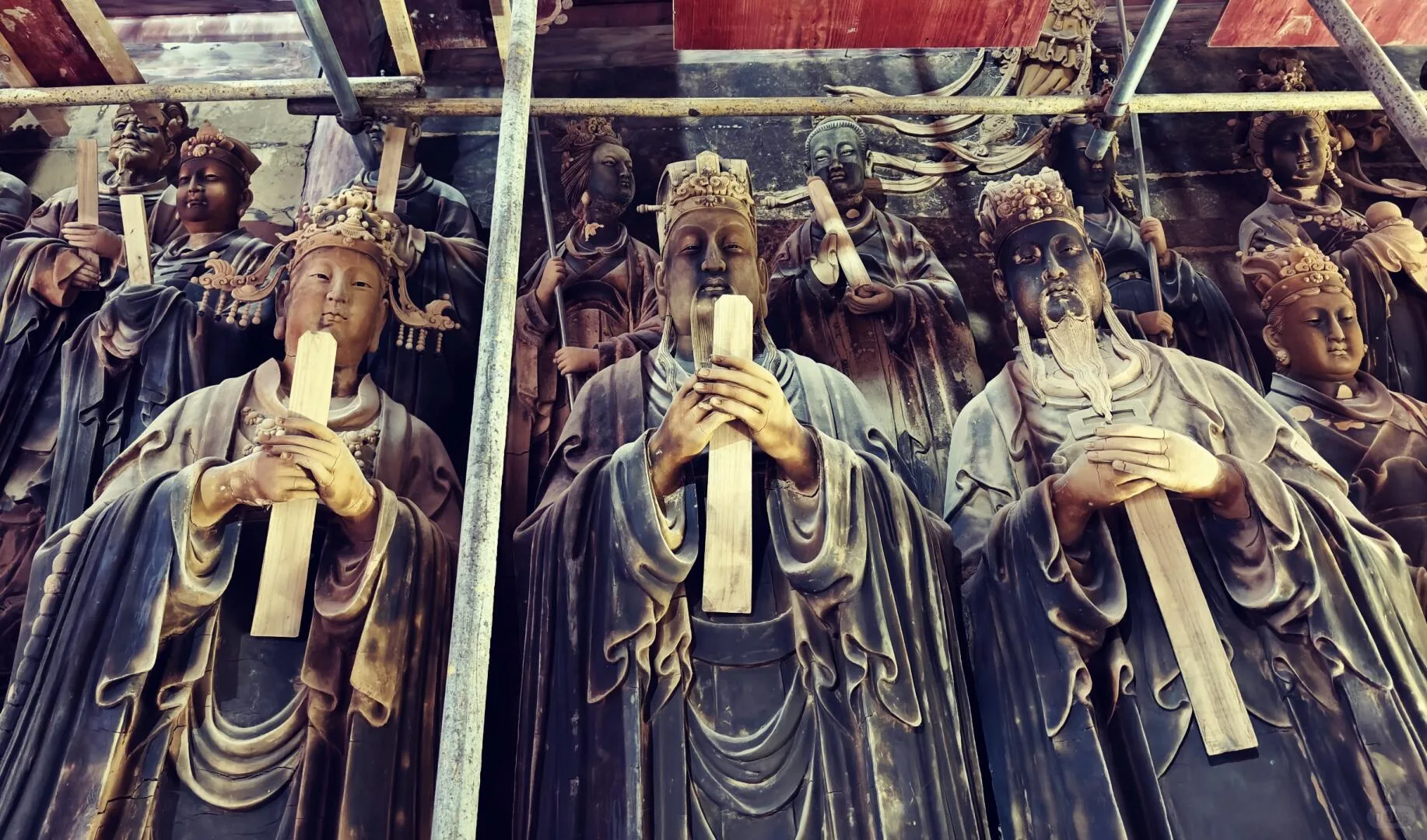
- Ritual tablets (lingpai)
- Flags and banners (fan)
- Swords and staves
- Seals, bells, and ritual rulers
No ritual tool in Daoism is complete without a talisman; the symbols transform ordinary objects into sacred instruments.
For example, in the Shangqing Tianlian Fumo Dafa, a marshal bell talisman is still in use today by Daoist priests. During rituals, ritual altars are set up and banners raised, which are ordinary cloth or woven materials—but once inscribed with talismans, they acquire divine power and spiritual efficacy.
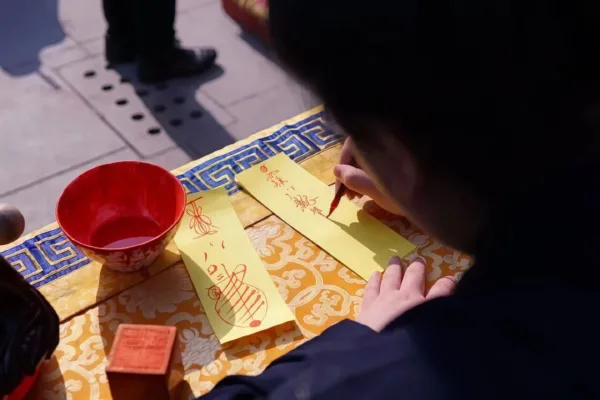
Getting Same Style


Methods of Daoist Talisman Writing: Shu, Virtual Writing, and Eye-Tracking
While the talismans (Fu) we commonly see are written on paper with ink, Daoist talismanry includes three main methods: Shu (writing), Virtual Writing (Xu Shu), and Eye-Tracking (Mu Yun).
1. Shu (Writing)
Shu is the general term for writing talismans and specifically refers to inscribing the talisman onto a material, such as paper, silk, wood, or other objects. This is the most straightforward and widely recognized method, which we discussed earlier.
2. Virtual Writing (Xu Shu)
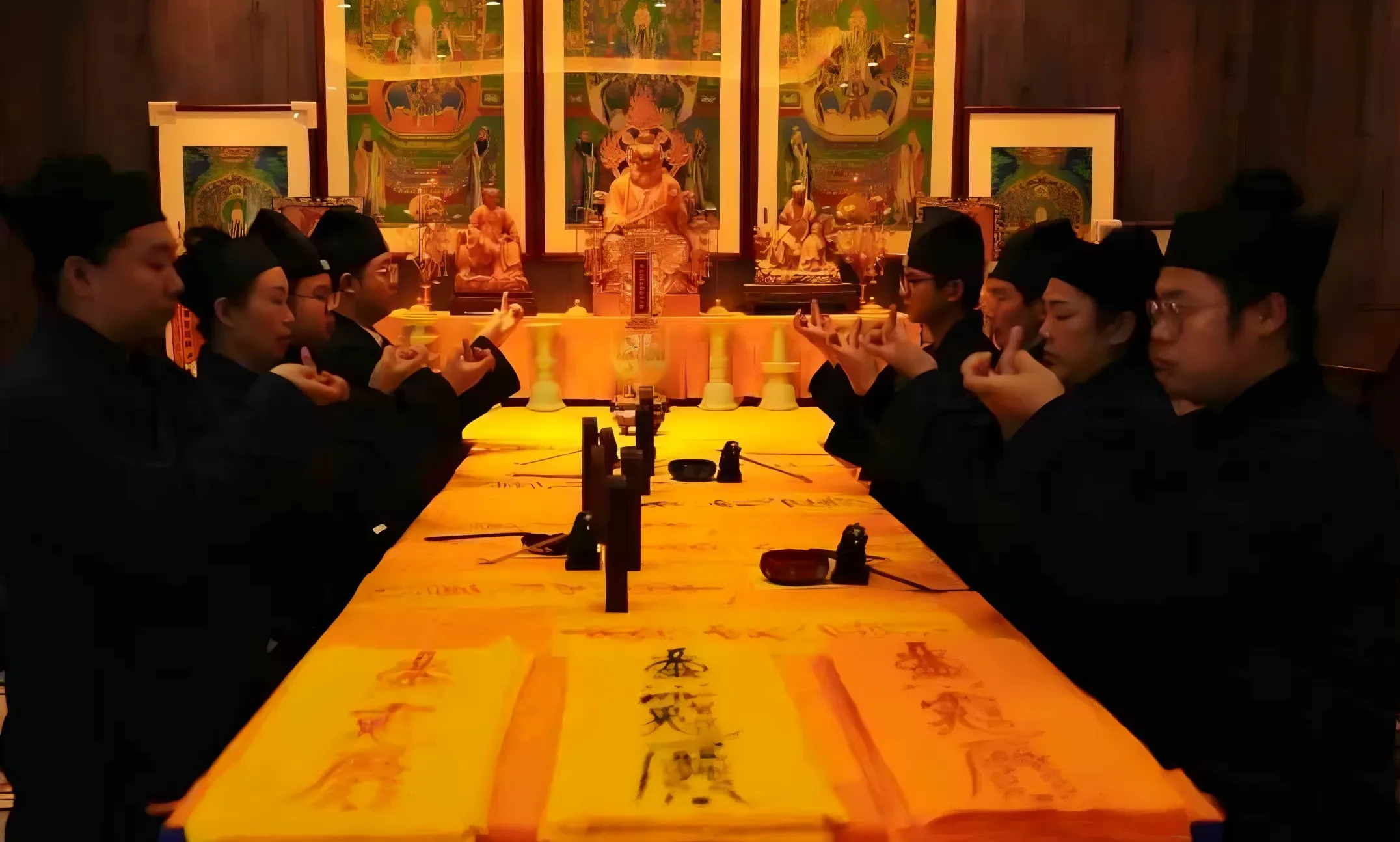
Virtual writing refers to writing talismans in the air, water, fire, or directed toward a person or object without leaving a physical mark. Tools for virtual writing include:
- Fingers – often tracing incantations above water or other media
- Swords – known as Zhuo Jian Shu Fu, pointing the sword to inscribe symbols in the air
- Ritual tablets (lingpai) – commonly used to summon spirits or command celestial generals
For example, a Daoist priest may trace a talisman over a water bowl while chanting or gesture with a sword toward the void to control spiritual forces or stabilize the ritual altar.
3. Eye-Tracking Writing (Mu Yun / Mu Shu)
Mu Yun, or Eye-Tracking Writing, involves using the eyes to “draw” talismans in the air, following the shape of the talisman while circulating spiritual energy (Qi). All Daoist schools use this method, though it is particularly refined in Thunder Magic (Lei Fa) traditions.
The Ming Dynasty Daoist Zhao Yizhen explained the principle:
“The spirit moves with Qi, residing in the head by day and the abdomen by night, and the mechanism rests in the eyes. Wherever the eyes move, the spirit and Qi follow. Focusing the mind and eyes is therefore an act of spirit projection.”
During rituals, you may see a Daoist priest holding a ritual tablet or sword, pointing at the void, while moving the head and eyes—this is actually Mu Yun writing in practice.
Key points for Mu Yun writing:
- The priest must visualize the talisman clearly in the mind (cun xiang).
- The priest must coordinate internal Qi circulation with eye movement (Qi Fa).
- Relevant incantations or mantras must be recited during the process.
In Daoist ritual practice, all three methods—Shu, Xu Shu, and Mu Yun—are often combined, forming a unified and effective method for invoking spiritual power, protection, or blessings.
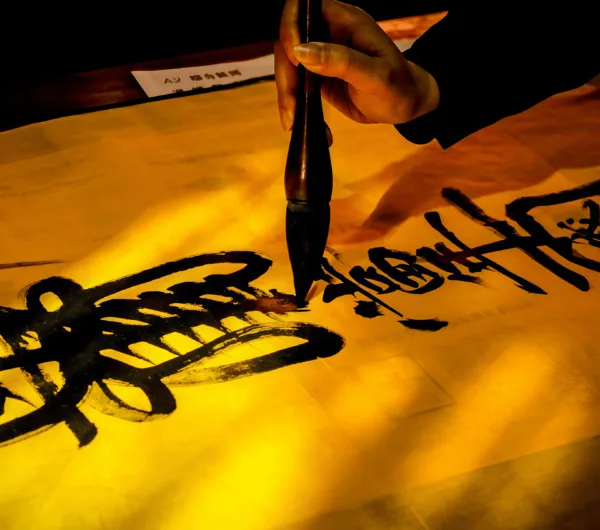
The Art of Daoist Talisman Writing: Precision, Qi, and Ritual Mastery
Writing a Daoist talisman (Fu) is far more than simply drawing symbols on paper—it is a sophisticated integration of spiritual cultivation, ritual technique, and precise execution. The process combines:
- Accurate strokes according to talismanic forms
- Activation of internal Qi and visualization (cun xiang)
- Recitation of mantras (zhou) and hand seals (jue)
- Sometimes ritual movements, like stepping the Big Dipper pattern (ta gang bu dou)
The Daoist text Xiantian Yiqi Huo Lei Zhang Shizhe Qidao Dafa provides a detailed example of writing the Zhang Envoy Talisman:
Step-by-Step Ritual Procedure
- Preparation
- Set up the altar, light incense, and arrange paper and writing tools.
- Sit in meditation, gather spiritual energy, and focus the mind.
- Activating the Pen
- Take the brush in hand (for rain rituals, hold palm down; for sun rituals, palm up).
- Recite mental mantras and concentrate until Qi flows into the brush.
- Writing the Talisman
- Begin with a single point on paper, symbolizing the envoy’s primordial Qi.
- Strokes are executed with mind, intent, and Qi fully coordinated—no interruption between intention and movement.
- Each line and symbol corresponds to specific mantras, divine invocations, and ritual meanings.
- For rain rituals, visualize a dark sky; for sun rituals, visualize flames ascending.
- Virtual and Symbolic Considerations
- Pen strokes are directed according to intended effect:
- Upwards for sunshine, downwards for rain, specific directions for exorcism, or summoning spirits.
- Seasonal and Yin-Yang distinctions are also observed.
- Initial strokes are often scattered (sanxing) and then consolidated into a final form (juxing).
- Pen strokes are directed according to intended effect:
- Ritual Integration
- Before and during writing, Daoist priests recite chants and mantras, such as:
- Jing San Ye Zhou
- Tianpeng Zhou
- Chiming, Ink, and Brush Mantras
- Qi from celestial constellations (e.g., Big Dipper, Twenty-Eight Mansions) is invoked.
- Hand seals, breath control, and ritual gestures synchronize spirit, Qi, and talismanic intent.
- Before and during writing, Daoist priests recite chants and mantras, such as:
- Final Steps
- The talisman must never linger too long; it is dispatched immediately.
- For secrecy, divine names are often replaced with symbols (e.g., “O”) on the talisman.
- In the Zhengyi tradition, the talisman is stamped with the Celestial Master’s seal (Yangping Zhi Dugong Yin) as formal authentication.
Key Principles of Talisman Writing
- Integration of Mind and Body: The priest’s focus, Qi flow, and brush movements must be inseparable.
- Intent and Visualization: The final form exists first in the mind before appearing on the paper.
- Ritual Correspondence: Seasonal, elemental, directional, and Yin-Yang principles guide every stroke.
- Mantras and Hand Seals: Spiritual authority is activated through oral and physical ritual expressions.
- Speed and Precision: Small talismans are often written in one stroke; large talismans require mastery over scattered and consolidated forms.
In short, a Daoist talisman is not a mere symbol but a living instrument, reflecting the priest’s cultivation, ritual authority, and connection to divine forces. Mastery requires years of training, deep spiritual insight, and exacting ritual discipline.