

Beyond Talismans: The Rich Material Culture of Taoism
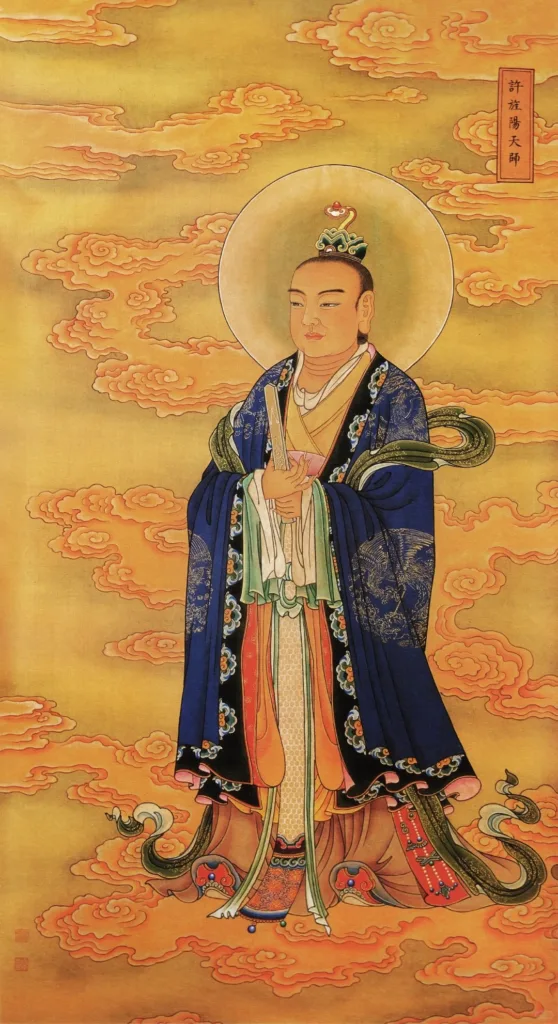
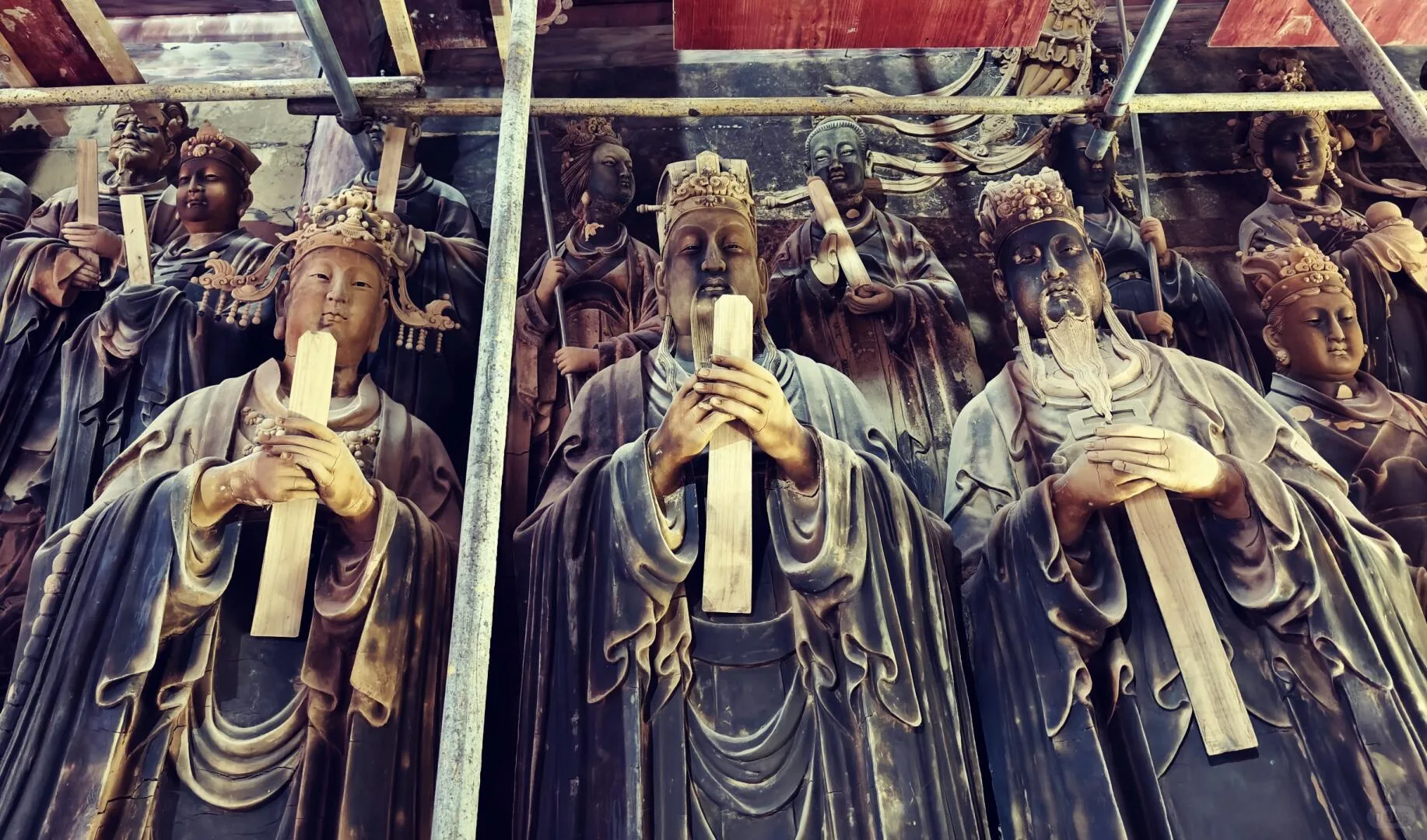
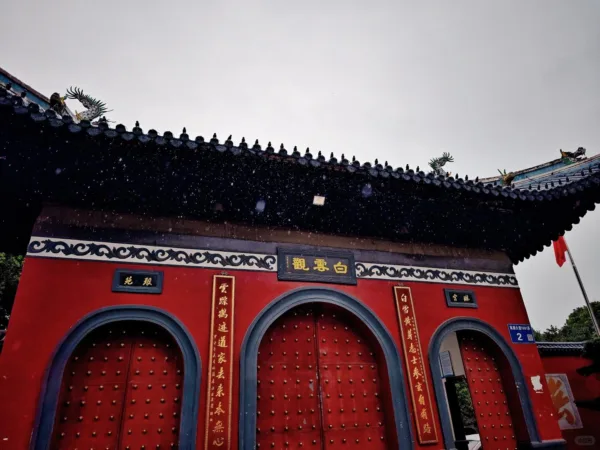
Taoism’s physical manifestations extend far beyond talismans (符, fú). Its tangible aspects encompass paintings, architecture, sculpture, clothing, ritual objects, and more, forming a complex material culture that reflects Taoist cosmology and spirituality. Developing a detailed iconographic history of Taoist artifacts will significantly advance academic research in Chinese Taoism and deepen our understanding of its cultural influence.
Main Schools of Taoist Symbolism: Dan Ding and Fu Lu
Taoist symbolism is traditionally divided into two major schools based on distinctive symbols:
Dan Ding (Cinnabar Cauldron) School:
Characterized by diagrams related to alchemy, immortality cultivation, and internal alchemical processes. The Dan Ding symbols often depict diagrams for transforming substances and achieving spiritual immortality.
Fu Lu (Talisman) School:
Focuses on talisman diagrams, stamped charms, and symbolic seals (符箓), collectively known as “Fu Lu.” These symbols serve to invoke divine power, ward off evil, and ensure protection.
The Inner Content of Taoist Talismans
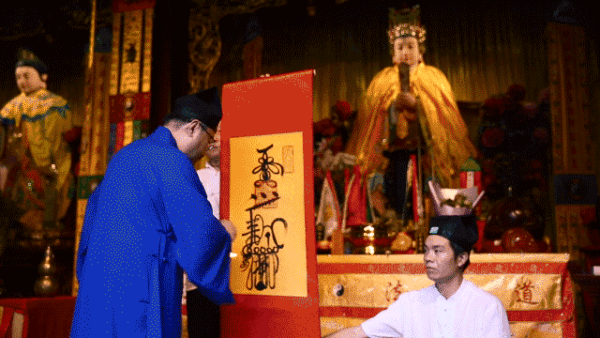
Taoist fú and fúzhuàng (talisman scrolls) are rich in spiritual and philosophical content. They come in countless varieties and forms, with complex symbols, incantations, and diagrams.
Difference Between Talisman and Talisman Scroll:
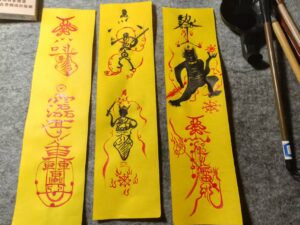
- Talisman (符): Mainly composed of symbols, characters, and divine images, believed to possess divine power to dispatch spirits, cure illness, and ward off evil.
- Talisman Scroll (符箓): Contains names of gods and spirits, descriptions of their appearance and functions, and instructions for invocation. These scrolls act as spiritual contracts or tokens recognized by divine forces.
Material and Appearance:
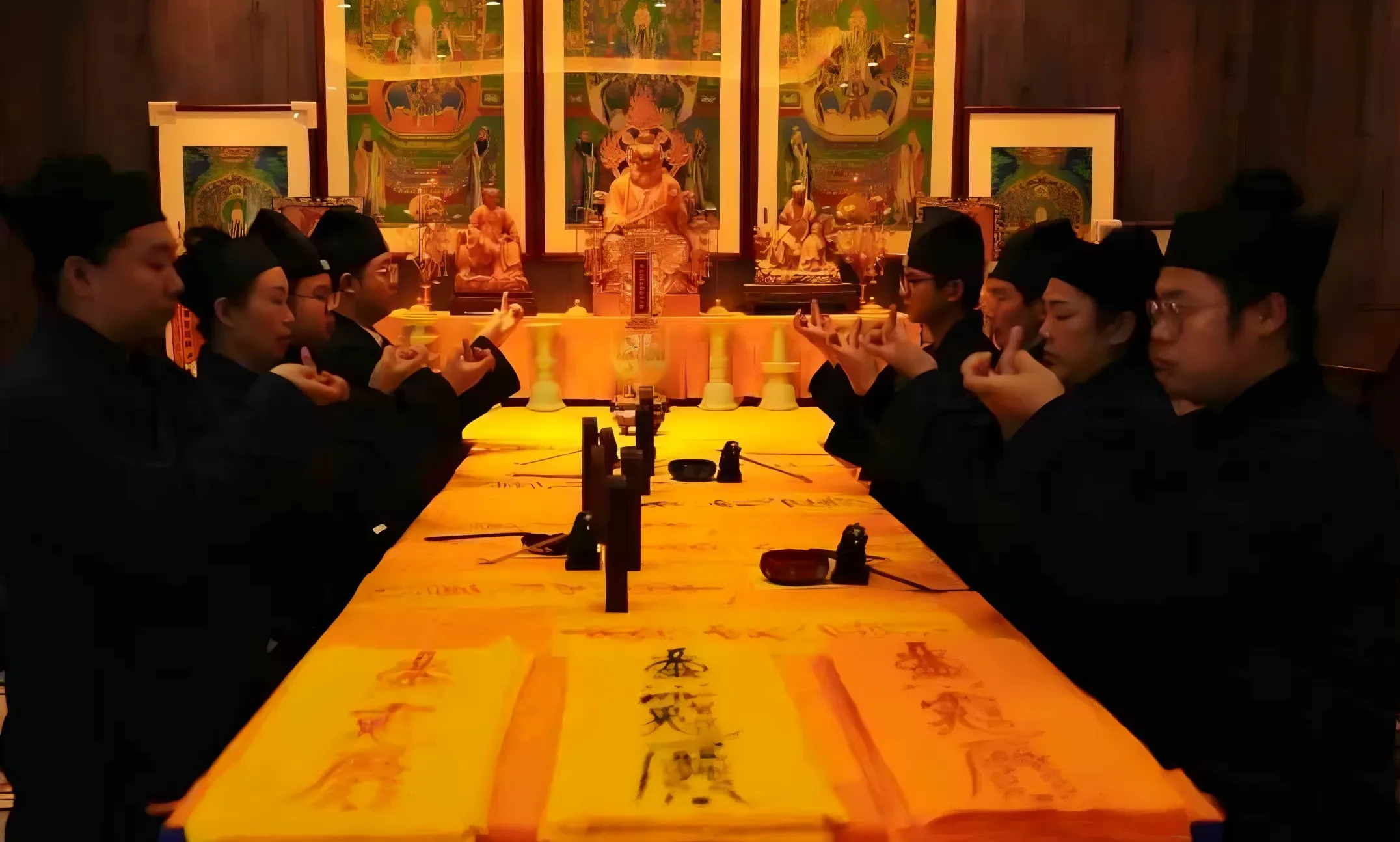
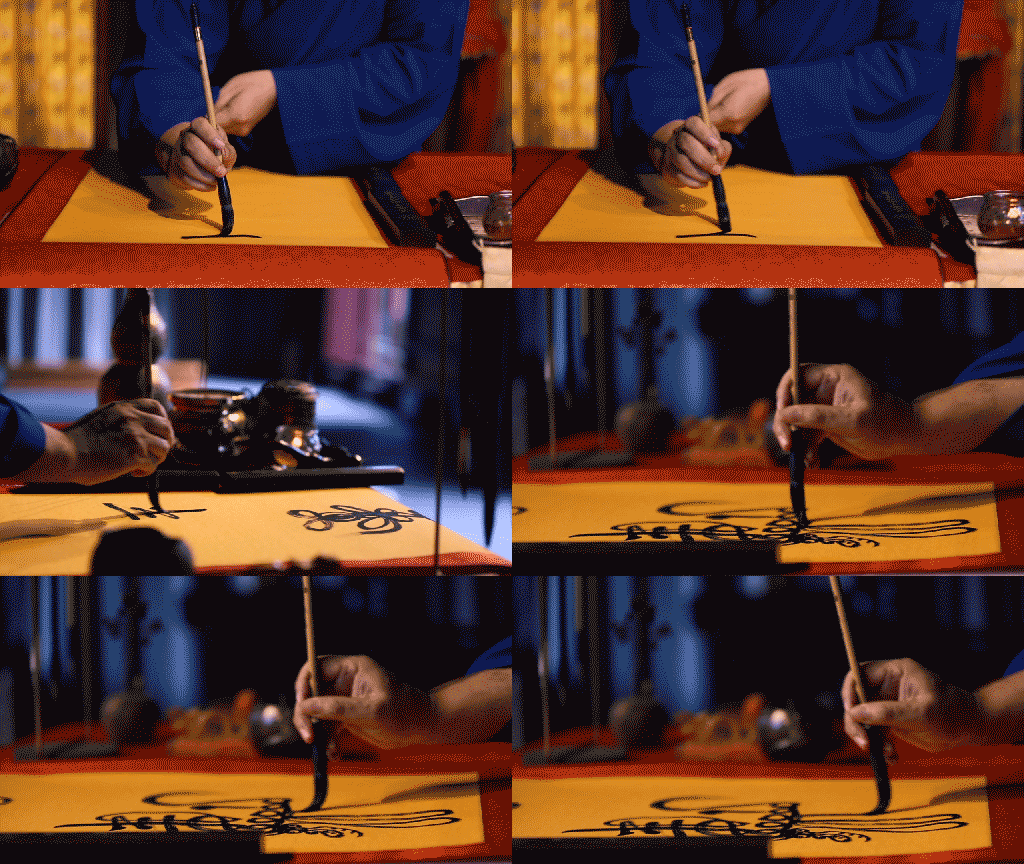
Most Taoist talismans are painted or written on paper, silk, bamboo, or carved into wood and metal objects. Some are inscribed or cast into buildings, steles, or ritual implements. Many symbols are abstract, bizarre, and intricate, making them difficult for outsiders to interpret—only trained Taoist priests or those with proper lineage can recite and draw them accurately.
Taoist fú and fúzhuàng (talisman scrolls) are rich in spiritual and philosophical content. They come in countless varieties and forms, with complex symbols, incantations, and diagrams.
Symbolic and Cultural Significance of Taoist Talismans
Taoist talismans carry profound symbolic meanings. For example, the “Five Sacred Peaks True Form Diagram” (Wu Yue Zhen Xing Tu) from the Wei and Jin periods was highly revered among Taoist priests of the Six Dynasties. Carrying such diagrams into the mountains was believed to invoke mountain gods and spirits, as Ge Hong describes in his Baopuzi. The diagram’s contours resemble mountain maps, emphasizing their role in spiritual geography.
Ancient Cartography and Iconography:
Research by Takashi Ogawa, Joseph Needham, Lu Jiaxi, and others has explored Taoist cartography, such as the “Map of the True Forms of the Five Sacred Mountains,” revealing how Taoist symbols served as spiritual maps of sacred lands.
Iconography of Taoist Talisman Images
Taoist ritual texts such as Dao Fa Hui Yuan include illustrations of talisman images, depicting divine weapons, celestial generals, and spiritual symbols. For example:
- “True Form Talisman of the Marshal” shows a sword with a divine figure holding a decree.
- “Resonant Blade Manifestation” features a dragon sword pointing upward, with accompanying divine imagery.
- “Ling Spirit Talisman” displays a sword with thunderclouds and lightning, symbolizing divine power.
These images resemble paper-cuttings rather than traditional paintings or New Year pictures. Some scholars suggest they may be related to shadow puppetry or ancient paper-cut art, hinting at interactive relationships with traditional Chinese folk arts.
Academic Study of Taoist Talismans and Symbols
International scholars have long researched Taoist talismans. French scholar Soane’s “Chronology of Western Taoist Studies” traces the origins of Taoist charms before the Han Dynasty, emphasizing their historical and cultural significance. Other scholars like Shi Xiuna view talismans as written contracts inscribed on wooden plaques, symbolizing divine agreements.
Historical Development:
- During the Han Dynasty, Taoist talismans gained prominence as tools linked to the Mandate of Heaven and imperial authority.
- During the Wei, Jin, and Northern Dynasties, the forms of talismans unified into long strip types, which became the standard.
- The Sui, Tang, Ming, and Qing dynasties saw a flourishing of Taoist talisman types, including seals, astronomical charts, and seals used in rituals, some of which spread to Japan and other countries.
Zhan Shichuang’s semiotic analysis in Chinese Social Sciences highlights that Taoist art is a complex system of natural and artificial symbols. These symbols express spiritual truths and reflect Taoist life consciousness through their aesthetic and symbolic richness. Taoist art embodies vitality, rhythm, and spiritual resonance, revealing the deep connection between human spirit and cosmos.
Future Directions: Applying Image History to Taoist Studies
Although much research has been conducted on Taoist talismans, a vast unexplored territory remains—particularly in applying image history methods to analyze Taoist visual content. Broader research into Taoist paintings, architecture, sculpture, clothing, and ritual objects will significantly advance Taoist studies in China and worldwide, providing new insights into this ancient spiritual tradition.