



The “Four Gratitudes and Three Abundances” in Taoist Practice
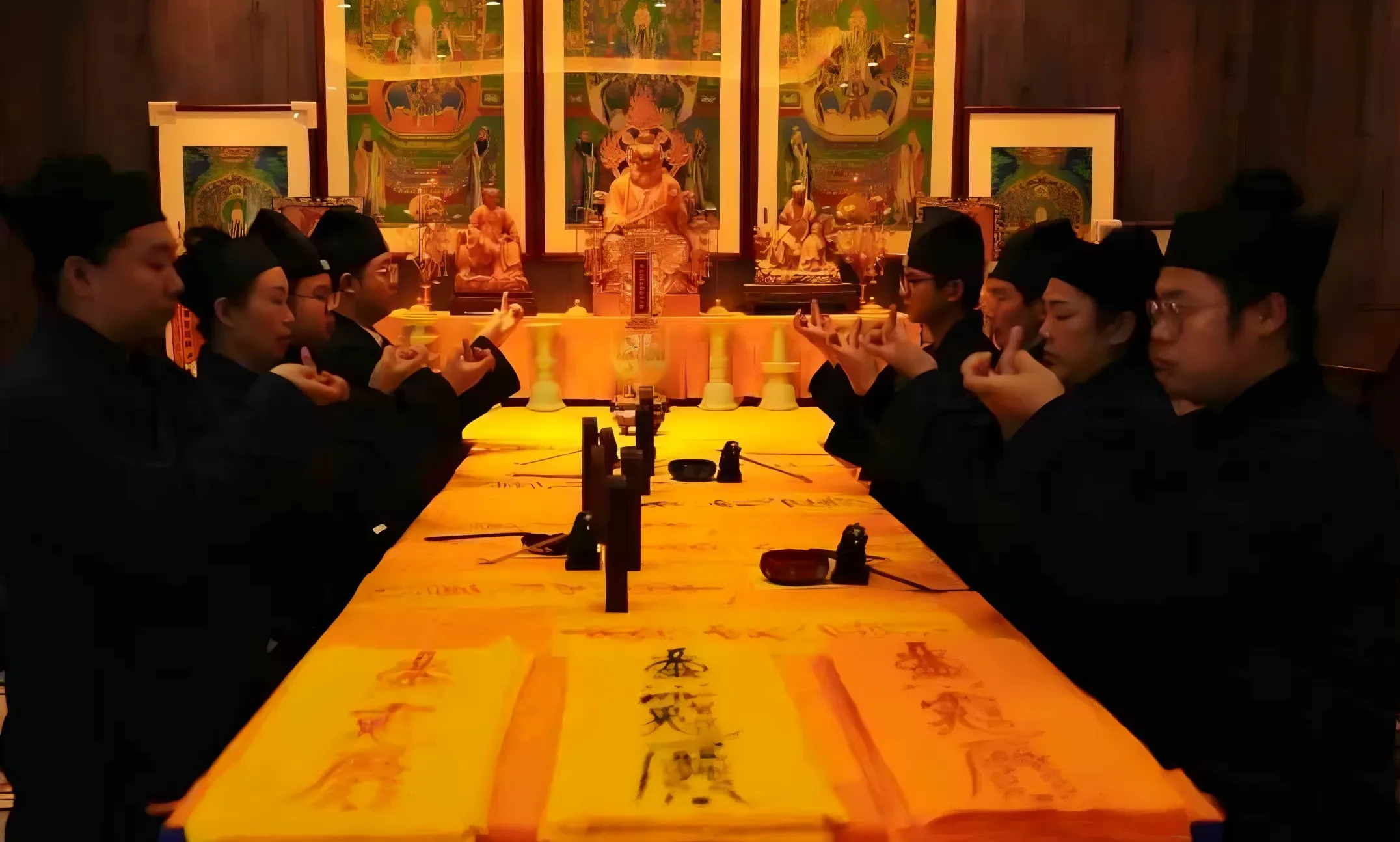
In Taoist morning and evening liturgies, there is a verse:
“May all disasters and obstacles be removed, may the supreme Way be practiced through all generations. The Four Gratitudes and Three Abundances benefit all, across the ten continents and three islands, living freely and harmoniously.”
Here, the “Four Gratitudes and Three Abundances” (四恩三有) reflect a key Taoist teaching: practitioners should cultivate gratitude and build virtuous connections with the world.
The Four Gratitudes (四恩)
The Four Gratitudes represent the four fundamental debts of kindness that Taoism encourages people to repay:
- Gratitude to Heaven and Earth (天地恩) – Appreciation for the natural world and the cosmic order that sustains life.
- Gratitude to the Sovereign and Country (君王国土恩) – Respect for rulers and the nation, recognizing the stability and protection they provide.
- Gratitude to Parents (父母恩) – Thankfulness for the care, love, and guidance of one’s parents.
- Gratitude to Teachers (师长恩) – Recognition of the knowledge, guidance, and moral instruction received from mentors and elders.
In Chinese culture, these four debts are often summarized as “Heaven, Earth, Sovereign, Parents, Teacher” (天地君亲师). Many families honor these relationships by placing ancestral tablets or shrines in the home, reflecting the integration of Taoist and Confucian ethical traditions.
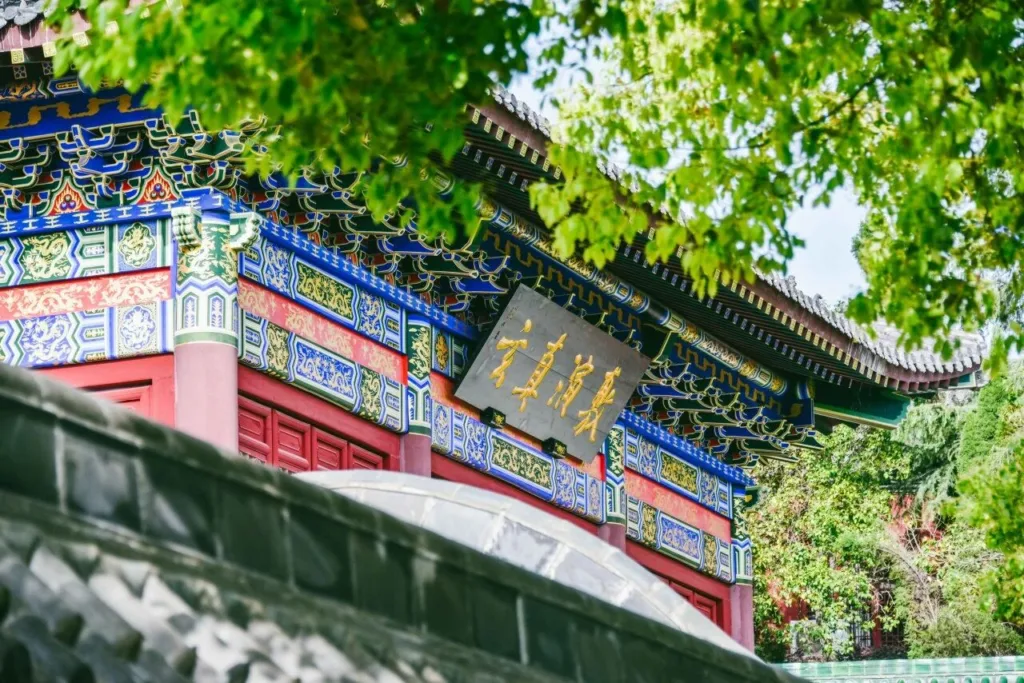
The Four Gratitudes in Taoism
Taoism emphasizes gratitude as a foundation for moral cultivation. The Four Gratitudes (四恩) remind practitioners to recognize the essential sources of support and benevolence in life.
1. Gratitude to Heaven and Earth (天地恩)
Taoism teaches that all things in the universe are born from the Dao. As the Qingjing Jing states:
“The Great Dao is formless, yet it gives birth to Heaven and Earth.”
Gratitude toward Heaven and Earth is, in essence, gratitude to the Dao for nurturing all life. At Qingcheng Mountain’s Sanqing Hall, a famous couplet reads:
“Dao produces One, One produces Two, Two produces Three, Three produces all things;
Humans follow Earth, Earth follows Heaven, Heaven follows Dao, Dao follows Nature.”
This not only explains the cosmic order but also reminds people to revere nature and honor the heavens and the earth. In folk belief, Heaven and Earth are often personified as Huangtian and Houtu, who are widely worshipped.
2. Gratitude to the Sovereign and Country (君王国土恩)
“Lord” here represents the nation and social order. While Taoism emphasizes personal cultivation, it also stresses protecting the country and benefiting the people. The saying “Descend in troubled times to save the world, retreat in prosperous times to the mountains” reflects the Taoist responsibility to society.
Without a stable nation and secure land, personal cultivation is like a tree without roots. Patriotism and service to the people are fundamental Taoist duties.
3. Gratitude to Parents (父母恩)
The Tai Shang Lao Jun Shuo Bao Fu Mu En Zhong Jing states:
“In life, parents are our guardians. Without a father, we would not be born; without a mother, we would not be nurtured.”
Parents’ love and care are immeasurable. Taoism places filial piety at the foundation of all virtues. Cultivating virtue and merit begins with honoring one’s parents—before pursuing the Tao, one must first practice humanity.
4. Gratitude to Teachers (师长恩)
Teachers impart knowledge, clarify doubts, and transmit the Way. Taoism places great importance on lineage and mentorship, teaching that:
“Without a teacher, Dao cannot be properly practiced.”
A teacher not only teaches Daoist methods but also helps disciples navigate karmic obstacles. Repaying the teacher’s kindness means following their guidance, practicing virtue, and upholding the integrity of the lineage. This is the true expression of gratitude toward one’s teacher.



The “Three Abundances” in Taoism
In Taoism, the “Three Abundances (三有)” generally refer to all sentient beings with consciousness and karmic connections. While the Dao itself is described as impersonal (“the Great Dao is without sentiment”), Taoist practice teaches that the impersonal Dao is applied to benefit all sentient beings. Practitioners cultivate compassion and wish to help all beings they are karmically connected to.
1. Consciousness (有识)
Cultivation begins with right knowledge and correct understanding. This clarity of mind—knowing the Dao, recognizing the principles of virtue—forms the foundation for all spiritual practice.
2. Sentience (有情)
True compassion arises when one intends to guide and benefit sentient beings. This refers to the practice of extending loving-kindness and moral guidance to those who are capable of receiving it.
3. Karmic Connection (有缘)
Being able to enter the Daoist path and encounter the correct teachings is itself the result of past karmic goodness. Taoism emphasizes cherishing and cultivating these connections. As the saying goes:
“Even heavy rain does not moisten grass without roots; the Dao only benefits those with karmic connection.”
Master Qiu also noted:
“Those who enter my Daoist lineage must have the seeds of virtue from past lives.”
Recognizing, valuing, and expanding karmic connections is thus an essential part of Taoist practice.
Integrating the Four Gratitudes and Three Abundances in Taoist Practice
For Taoist practitioners, constantly remembering the Four Gratitudes (四恩) is a way of honoring one’s roots, while benefiting the Three Abundances (三有) is an expression of a compassionate Daoist heart.
By grounding one’s life and actions in these principles, a practitioner naturally aligns with the Taoist ideals of benefiting the world and harmonizing with all beings. This path is not only a moral foundation but also a practical way to move toward the Taoist vision of freedom and ease across the “ten continents and three islands”—a state of unbounded harmony and spiritual liberation.